
Table of Contents
- Understanding Your Consumer Rights for Faulty Products
- Steps to Initiate a Return for Damaged Goods
- How to Document Damaged Shipments for Your Claim
- Time Limits and Return Windows
- Return Policy Template for Damaged Items
- Refund vs. Replacement vs. Repair: What to Expect
- Common Mistakes to Avoid When Returning Damaged Goods
- Conclusion
Last Updated: August 11, 2026
Understanding Your Consumer Rights for Faulty Products
When you receive a damaged item, you have legal protections under consumer protection legislation. In Canada, consumer rights for faulty products are governed by provincial consumer protection acts and the Competition Act. These laws establish that merchants have a responsibility to deliver goods in acceptable condition, and you have the right to reject faulty goods or demand a remedy.
The core principle is straightforward: if a product arrives damaged or defective, the retailer is obligated to make it right. This isn’t a favor, it’s your statutory right as a consumer. Understanding what qualifies as damage versus normal wear, and knowing the timeframe within which you can act, puts you in control of the return process.
Damage falls into two categories. First, there’s shipping damage: harm caused during transit by the courier or shipper. Second, there’s manufacturing defects: products that arrive with inherent flaws. Both entitle you to a remedy, though the process may differ slightly depending on where liability lies.
At McMullon Brands, we recognize that receiving damaged goods is frustrating, especially when you’re excited about a purchase. That’s why understanding your rights and following a clear process makes all the difference in getting the outcome you deserve.
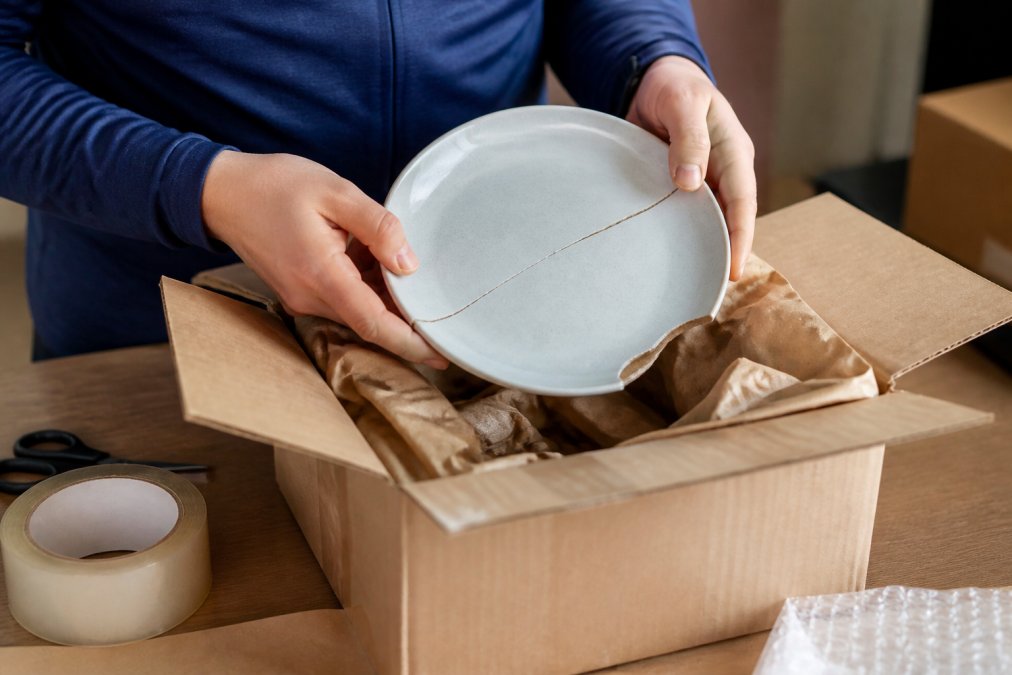
Document everything immediately upon opening your package. The moment you notice damage, photograph it from multiple angles before touching or handling the item further. This evidence becomes critical if the retailer or courier disputes your claim.
Steps to Initiate a Return for Damaged Goods
The process for returning damaged goods follows a logical sequence. Act quickly, gather your documentation, and communicate clearly with the retailer. Most retailers will work with you if you follow the proper steps and provide evidence.
Step 1: Inspect and Assess the Damage
Open your package carefully and examine the item thoroughly. Look for visible damage to the product itself, packaging materials, or both. Take note of the specific type of damage: dents, tears, stains, broken components, or defects that prevent the item from functioning as intended.
Distinguish between shipping damage and manufacturing defects. Shipping damage typically appears as external trauma: crushed packaging, torn boxes, or impact marks. Manufacturing defects are flaws in the product itself that have nothing to do with transit: loose stitching on apparel, misaligned graphics, or structural weaknesses that suggest poor quality control.
The distinction matters because it determines whether the courier or the retailer bears responsibility. However, as the consumer, you’re entitled to a remedy regardless of where the fault lies, the retailer must resolve it.

Don’t delay this assessment. Most retailers require you to report damage within a specific window, often 7 to 14 days of delivery. Waiting weeks to inspect your package weakens your position because the retailer may question whether the damage occurred during transit or afterward in your home.
Step 2: Contact Customer Support Immediately
Reach out to the retailer’s customer support team as soon as you confirm damage. Use their preferred contact method, email, live chat, or phone, and provide a clear, factual description of the damage. State what you received, what damage is present, and what you’re requesting as a remedy: refund, replacement, or repair.
Keep your initial message concise but thorough. Include your order number, purchase date, and product name. Avoid emotional language or accusations; stick to facts. Retailers respond better to straightforward communication than to frustrated complaints.
Most retailers will ask you to provide photographic evidence before processing your claim. Be prepared to share photos immediately. This speeds up the process and demonstrates that you’re serious about resolving the issue.
Do not return the item or discard packaging without explicit instructions from the retailer. Some retailers need to inspect the damage themselves before approving a refund or replacement. Sending items back without authorization can complicate your claim.
Step 3: Gather Your Proof of Purchase
Your proof of purchase is the foundation of your claim. Collect your order confirmation email, transaction receipt, and any shipping documentation. These documents prove you purchased from this retailer, when you purchased, and what you paid.
If you bought the item in person, keep your receipt. If you purchased online, save or print your order confirmation and any tracking information. This documentation establishes the contract of sale between you and the retailer and is essential if the dispute escalates.
How to Document Damaged Shipments for Your Claim
Documentation transforms a "he said, she said" situation into verifiable evidence. The stronger your documentation, the faster your claim will be resolved.
Photographic Evidence Protocols
Photographs are your most powerful tool when claiming damage. Follow a systematic approach to ensure your images tell a clear story of what went wrong.
First, photograph the packaging as it arrived. Capture the exterior of the box or envelope showing any visible damage: crushed corners, torn sections, water stains, or signs of rough handling. Take multiple angles so the damage is unmistakable. Include a clear view of any courier labels or handling marks.
Next, photograph the item itself. Start with wide shots showing the overall condition, then zoom in on specific areas of damage. If the item has a graphic or design, photograph it straight-on to show any misalignment, fading, or defects. For apparel, photograph seams, stitching, and any tears or stains. For fragile items, show any cracks, breaks, or dislodged components.

Use natural lighting whenever possible. Harsh shadows or dim lighting make damage harder to see in photos. If the damage is subtle, take photos in different lighting conditions to ensure it’s visible.
Include a reference object in some photos. Placing a coin, ruler, or your hand next to the damage gives scale and context. This prevents retailers from dismissing the damage as minor or insignificant.
Avoid editing or filtering your photos. Retailers need to see the damage as it actually is. Cropping is fine to focus on the problem area, but don’t alter colors, brightness, or contrast in ways that misrepresent the damage.
Written Documentation and Record-Keeping
Create a written record of everything related to your return claim. Start a simple document or email thread that includes:
- Date and time you opened the package
- Detailed description of the damage (type, location, severity)
- What you requested as a remedy (refund, replacement, repair)
- Retailer’s response and any case or ticket number they provided
- Dates of all communications
- Names of customer support representatives if provided
This written trail protects you if the claim takes time to resolve or if you need to escalate to a higher authority. It also helps you remember details if weeks pass before the issue is fully resolved.
Keep all emails and chat transcripts. Many retailers will provide a case number or reference code, write this down immediately and include it in all future communications. This number helps the retailer track your specific claim and prevents miscommunication.
Time Limits and Return Windows
Return windows are critical. Most retailers set specific timeframes within which you must report damage or initiate a return. These windows typically range from 7 to 30 days, depending on the retailer’s policy and local consumer protection laws.
The general principle is that you must report damage within a reasonable time after receiving the item. Waiting months to complain makes it difficult to prove the damage occurred during transit rather than through your own use or mishandling.
Check the retailer’s return policy for their specific timeline. If they don’t clearly state a window, contact them and ask. Document their response in writing. If the retailer’s stated policy is shorter than what consumer protection laws allow in your province, the legal requirement takes precedence.
Some retailers offer extended windows for damaged goods, sometimes up to 60 days, because they recognize that damage isn’t always immediately apparent. If you discover damage weeks after receiving an item, contact the retailer anyway. Explain the delay honestly and provide clear evidence. Many retailers will still process your claim.
Return Policy Template for Damaged Items
Use this template as a guide when communicating with customer support about your damaged item return:
Subject: Damaged Item Return, Order [Your Order Number]
Hello,
I received my order [Order Number] on [Date]. Unfortunately, the item arrived damaged. Specifically, [describe the damage clearly: "the graphic is misaligned," "the package was crushed and the item inside has a dent," etc.].
I have attached photos showing the damage. I purchased this item on [Purchase Date] for [Amount], and I would like to [choose one: request a full refund / request a replacement item / explore repair options].
Please let me know what information you need from me to process this claim. I’m happy to provide additional photos or documentation.
Thank you for your attention to this matter.
Best regards,
[Your Name]
[Order Number]
This template is straightforward, professional, and includes all the information a retailer needs to process your claim quickly. Customize it with your specific details and send it as your initial contact.
Refund vs. Replacement vs. Repair: What to Expect
When you report damage, you have three primary options for resolution. Understanding the differences helps you choose what’s best for your situation.
A refund returns your money. The retailer processes a credit to your original payment method, and you typically return the damaged item at the retailer’s expense. Refunds are the most straightforward remedy but may take time to appear in your account (typically 5 to 10 business days after the retailer receives the returned item).
A replacement sends you a new item. The retailer ships a fresh product at no cost to you. You return the damaged item using a prepaid shipping label. Replacements are ideal if you want the product and trust that the next one will arrive undamaged. However, there’s a small risk that the replacement also arrives damaged, which prolongs resolution.
A repair fixes the damaged item. This option is less common for consumer goods and is typically offered only for high-value items or items with minor damage. Repairs take time and require you to trust that the retailer will do quality work.
Most retailers default to replacement for damaged goods because it’s faster than processing a refund and keeps you as a satisfied customer. However, you have the right to request a refund, especially if you’ve lost confidence in the product or retailer.
Document your preference when you first contact the retailer. If you say “I’d like a refund,” they’re less likely to assume you’ll accept a replacement. Being clear about what you want accelerates the process.
Common Mistakes to Avoid When Returning Damaged Goods
Several mistakes can slow down your claim or result in a denied request. Knowing what to avoid keeps your return on track.
Mistake 1: Waiting too long to report damage. If you wait weeks or months to contact the retailer, they’ll question whether the damage occurred during transit or through your own use. Report damage immediately upon discovery.
Mistake 2: Discarding packaging or returning items without authorization. Retailers often need to inspect the packaging to assess whether courier damage occurred. Always wait for explicit instructions before returning anything.
Mistake 3: Taking poor-quality photos. Blurry, dark, or incomplete photos make it harder for the retailer to verify your claim. Invest a few minutes in clear, well-lit images from multiple angles.
Mistake 4: Being vague about the damage. Instead of saying "the item is damaged," describe exactly what’s wrong: "the graphic is faded in the upper left corner," "the seam is torn along the side," or "the item arrived in pieces." Specificity makes claims credible.
Mistake 5: Accepting a partial refund without negotiation. Some retailers offer a small discount instead of a full refund or replacement. If the item is genuinely damaged and unusable, push back. You’re entitled to a full remedy, not a discount.
Mistake 6: Failing to keep records. If you rely on memory or lose emails, you have no proof of your communications. Save everything: order confirmations, photos, emails, chat transcripts, and case numbers.
Mistake 7: Using aggressive or accusatory language. Retailers respond better to calm, factual communication. Blaming them or using hostile tone makes them defensive and less likely to go the extra mile to resolve your issue.
Returning damaged goods doesn’t have to be stressful. By understanding your consumer rights for faulty products, acting quickly, and documenting thoroughly, you can navigate the process confidently. Whether you’re seeking a refund, replacement, or repair, the key is clear communication and solid evidence.
Contact McMullon Brands if you receive a damaged item, and our customer support team will guide you through the return process. We stand behind the quality of our products and work quickly to make things right. With free shipping on all our unique, whimsical merchandise, we want you to receive your order in perfect condition, and if something goes wrong, we’re here to help resolve it.
Frequently Asked Questions
How long do I have to report damaged goods after delivery?
Report damage as soon as you discover it, ideally within 7 to 14 days of delivery. Most retailers require notification within a reasonable timeframe to process your claim. Delays weaken your position because you cannot prove the damage occurred during transit rather than through later mishandling. Check your retailer's specific return policy, as some enforce stricter deadlines. Document everything immediately with photos and written notes to support your claim.
What are my consumer rights regarding damaged goods?
Your consumer rights for faulty products include the right to reject goods that arrive defective or damaged in transit. Under statutory rights, you can claim a refund, replacement, or repair at no cost to you. The retailer is responsible for goods arriving in resale condition. If damage occurred during courier handling, the merchant typically pursues the carrier for compensation. Keep your transaction record and proof of purchase to enforce these rights. Contact customer support to initiate your claim formally.
Do I have to pay for return shipping on a damaged item?
No. When goods arrive damaged or faulty, the retailer covers return shipping costs. This is their obligation under consumer protection standards. You should not bear the expense of returning their defective product. Confirm this with customer support before shipping. If a retailer insists you pay return postage for damage they caused, escalate your complaint. Some merchants provide a return shipping label automatically; others require you to request one. Always ask for documentation of this arrangement.
How do I document a damaged product for a return claim?
How to document damaged shipments requires a multi-step approach. Take clear photographs from multiple angles showing all damage to both packaging and the item itself. Include photos of the original packaging, any shipping labels, and the damage in context. Write a detailed description noting the date received, specific damage observed, and how it affects the product's use. Keep your transaction record, invoice, and any courier tracking information. Send this evidence to customer support as part of your claim. Organized evidence submission speeds up claim processing and strengthens your position.
This article was written using GrandRanker
Leave a Reply