
Table of Contents
- Why People Are Choosing Alternatives to Standard Plastic Phone Cases
- Compostable Phone Cases: Materials, Performance, and End-of-Life
- Sustainable Phone Case Materials: What Actually Works
- Wood Phone Cases Durability: Strength and Longevity
- Comparison of Top Non-Plastic Phone Case Alternatives
- Environmental Impact: Plastic Versus Alternatives
- Wireless Charging and MagSafe Compatibility
- How to Choose the Right Alternative for Your Needs
- Frequently Asked Questions
Last Updated: September 4, 2026
The global phone case market is estimated at $12.33 billion in 2026, yet the material most of us default to, standard plastic, carries an environmental cost that lasts centuries after our upgrade cycle ends. If you are exploring alternatives to standard plastic phone cases, you are part of a fast-growing shift toward materials that break down, use fewer resources, or simply last longer. The good news is that the current generation of eco-friendly cases no longer forces you to choose between protecting your device and protecting the planet. Below, we break down the real performance, durability, and end-of-life trade-offs of the top options so you can pick the one that fits your lifestyle.
The market is responding to this demand. Plastic-based cases still hold 46% of global market share, but leather accounts for 27% and silicone for 21%, according to Industry Research Biz market analysis. More importantly, the alternatives are getting better. Eco-friendly cases produced with plant-based materials generate 80% less waste during manufacturing than mainstream plastic, per Compare and Recycle’s guide to eco-friendly phone cases. That is a compelling reason to look beyond the standard clear TPU case.
Why People Are Choosing Alternatives to Standard Plastic Phone Cases
The primary driver is simple: standard plastic cases do not disappear. They break down into microplastics over decades, contributing to pollution long after you have recycled or discarded the phone itself. Beyond the environmental guilt, many users find that plastic cases yellow within months, look cheap, and offer slippery grips that lead to more drops, not fewer.
A secondary motivation is the tactile and aesthetic experience. Wood, fabric, and plant-based biopolymers offer textures and finishes that mass-produced plastic cannot replicate. Consumers are also responding to a broader trend toward sustainable manufacturing, where brands benchmark their carbon emissions and water usage against traditional plastic production. This shift is not just about feeling good; it is about supporting a circular economy where the case you buy today does not become a permanent waste problem tomorrow.
Compostable Phone Cases: Materials, Performance, and End-of-Life
Compostable phone cases are the most direct answer to the plastic waste problem. Instead of lingering in a landfill, these cases are engineered to break down into organic matter under the right conditions.
How Compostable Cases Break Down
Compostable cases are typically made from plant-based biopolymers, such as polylactic acid blended with agricultural byproducts like flax straw. Pela, a pioneer in this space, uses a proprietary blend called Flaxstic. Critically, “compostable” does not mean you can toss the case in your backyard bin and expect it to vanish. Most require the heat and microbial activity of an industrial composting facility to break down efficiently. If your city does not offer industrial composting, check if the manufacturer provides a take-back program so the case reaches the right facility.
Durability Under Real-World Conditions
The durability question is the first thing skeptics raise, and it is fair. Compostable cases are generally flexible and provide adequate drop protection for everyday use, absorbing shock from waist-height drops. However, they are not indestructible. Long-term exposure to extreme heat or prolonged UV sunlight can accelerate degradation. In practice, a compostable case should last the typical 2-3 year lifespan of a smartphone if you treat it with reasonable care. The trade-off is clear: you sacrifice a small margin of longevity for a material that does not persist in the environment.
Sustainable Phone Case Materials: What Actually Works
Beyond compostables, a range of sustainable phone case materials offer different balances of durability, feel, and environmental benefit.
Plant-Based Polymers and Bio-Resins
Plant-based polymers and bio-resins are engineered to mimic the flexibility and shock absorption of traditional plastic without the petroleum base. They perform nearly identically to thermoplastic polyurethane in drop tests, offer a tactile grip, and maintain a slim profile. The key advantage is that they use renewable resources and typically produce fewer emissions during manufacturing. For users who want the familiar feel of a flexible case without the plastic guilt, this is the most seamless transition.
Natural Fiber Composites
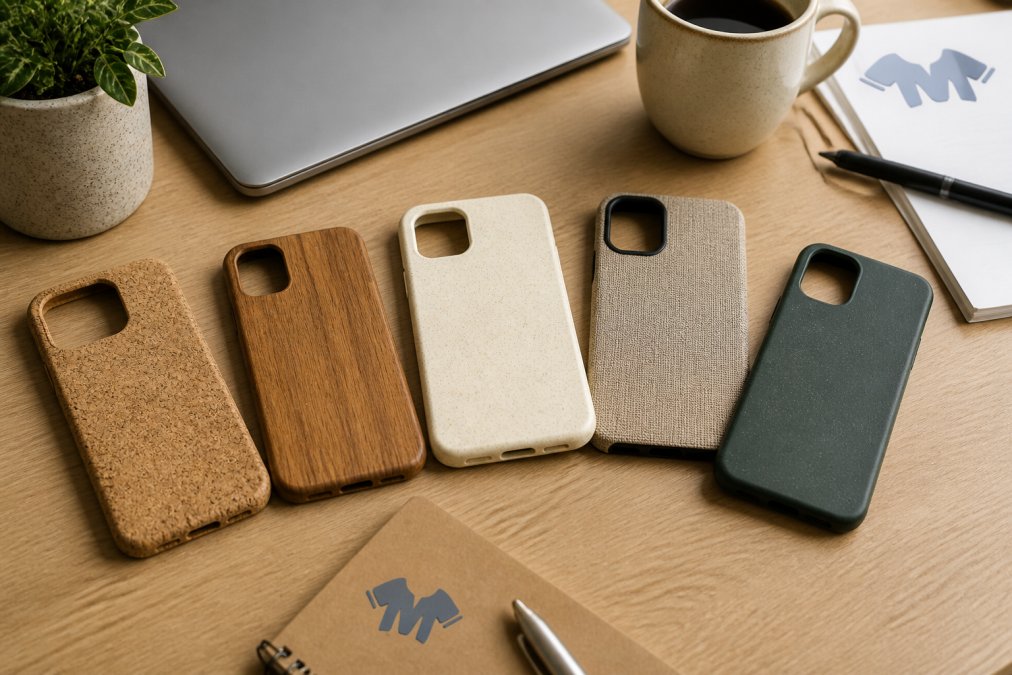
Natural fiber composites, such as bamboo, wood, and even coffee bean byproducts, bring a unique aesthetic to the table. These materials are often mixed with a bio-resin binder to provide structure. They offer excellent scratch resistance and a distinctive, tactile grip that improves with age. The trade-off is that these composites can be less shock-absorbing than their polymer counterparts. A drop onto concrete may transfer more force to the phone, so users who prioritize maximum impact resistance should look for a model with a reinforced bumper or inner core.
Wood Phone Cases Durability: Strength and Longevity
For those drawn to organic aesthetics, wood phone cases durability is a common concern. The short answer is that a well-constructed wood case is far tougher than it looks.
Drop Protection and Impact Resistance
Wood cases generally provide solid protection against scratches and minor bumps, but they do not offer the same shock absorption as silicone or TPU. A hard wood shell transfers impact energy directly to the phone frame. To mitigate this, many manufacturers line the interior with a soft microfiber or a thin rubber layer to absorb some shock. If you are prone to dropping your phone on hard surfaces, a wood case may not be your safest bet; however, for everyday handling and pocket protection, it is more than adequate.
Long-Term Material Degradation
Unlike plastic, which yellowing and becomes brittle, wood ages gracefully. It can develop a patina over time, and minor scratches can often be buffed out. The primary long-term risk is moisture. If you live in a humid climate or frequently use your phone in the rain, look for a wood case with a sealed finish to prevent warping. With proper care, a wood case can outlast the phone it protects.
Comparison of Top Non-Plastic Phone Case Alternatives
The market offers several distinct approaches to replacing plastic. Here is how the top alternatives stack up.

Pela Case: Fully Compostable Protection
Pela is the benchmark for compostable cases. Its Flaxstic material is flexible, provides a soft-touch grip, and is free of phthalates, BPA, and lead. It is the best choice for users who want a genuine zero-waste end-of-life solution, provided they have access to industrial composting. The one drawback is the higher price point compared to standard plastic cases, reflecting the cost of sustainable material sourcing.
MMORE: Handcrafted Natural Materials
MMORE takes a different path, crafting cases from real wood, hay, and even coffee beans. Each unit has a unique grain and texture, and some are infused with natural scents. This is the option for users who want a tactile, organic aesthetic that stands out. The trade-off is that natural materials show wear differently than synthetic polymers, and they may not offer the same level of impact protection as a polymer-based case.
Wavecase: Slim Compostable Design
Wavecase focuses on minimalism. Its plant-based compostable material maintains a slim, lightweight profile while offering shock-absorbent properties. It is an excellent middle ground for minimalists who want eco-friendly protection without added bulk. The primary limitation is a narrower range of colors and patterns compared to mainstream plastic brands.
Peak Design Everyday Case: Fabric and Performance
Peak Design approaches sustainability through durability. Its Everyday Case features a weatherproof nylon canvas shell over a rubberized shock-absorbing bumper, and it integrates with the company’s SlimLink mounting system. This is a premium, high-performance case designed for photographers and active users. The fabric finish feels more premium than standard TPU, and the case is MagSafe compatible. Expect to pay a premium for this level of build quality and ecosystem integration.
Smartish Gripmunk: Grip-Focused Ergonomics
Smartish solves the plastic problem differently: it makes a case so grippy you are less likely to drop your phone in the first place. The Gripmunk features textured sides, air-pocket corners for impact protection, and a slim profile. It is an excellent budget-friendly option that prioritizes ergonomics and drop prevention. The honest caveat is that it still utilizes synthetic materials, so it is not a plastic-free solution, but it is a functional one that extends device longevity.
| Case | Material | Best For | Starting Price | Key Trade-Off |
|---|---|---|---|---|
| Pela Case | Compostable biopolymer | Zero-waste users | $50 CAD | Needs industrial composting |
| MMORE | Wood, hay, coffee | Organic aesthetic | $45 CAD | Less shock absorption |
| Wavecase | Plant-based compostable | Minimalists | $40 CAD | Fewer color options |
| Peak Design | Nylon canvas | Photographers/active | $60 CAD | Premium price |
| Smartish Gripmunk | Textured synthetic | Drop prevention | $20 CAD | Not plastic-free |
Environmental Impact: Plastic Versus Alternatives
The environmental math favors alternatives, but not every alternative is equal. Research from Compare and Recycle’s environmental comparison shows that sustainable cases like Pela’s are produced with 30% less carbon emissions and 34% less water than mainstream plastic cases. The waste reduction is even more dramatic at 80% less waste during production.
The end-of-life phase is where the gap widens further. A standard plastic case is downcycled or sent to a landfill, where it persists for centuries. A compostable case, by contrast, returns to the soil in a matter of months in the right facility. Even a durable case that lasts 5+ years, like the Peak Design, reduces environmental impact by simply delaying the need for a replacement, a principle that aligns with Consumer Reports’ guidance on product longevity and device longevity.
Wireless Charging and MagSafe Compatibility
A common concern when switching away from plastic is whether the new case will interfere with charging. The short answer is that material thickness matters more than the material itself. Most compostable and plant-based polymer cases are thin enough to allow standard Qi wireless charging to work without issue.
MagSafe integration is a different story. The magnets in MagSafe are strong, but a thick case, especially one with wood or metal components, can weaken the magnetic connection. For reliable MagSafe use, look for alternatives that are explicitly marketed as MagSafe compatible. Peak Design’s Everyday Case is a standout here, but many compostable brands now include the necessary magnetic ring to ensure accessories snap on securely. If you rely heavily on MagSafe, check the product specifications before purchasing.
How to Choose the Right Alternative for Your Needs
Choosing between these alternatives to standard plastic phone cases comes down to your priorities. If environmental impact is your sole focus, a compostable case from Pela or Wavecase is the clear winner, provided you can compost it properly. If you value a natural aesthetic and are willing to accept some wear, MMORE offers a unique product.
For users who primarily want a case that lasts a long time and performs under stress, the Peak Design Everyday Case justifies its price with superior build quality and a mounting ecosystem. And if your problem is simply that you drop your phone, the Smartish Gripmunk is the most cost-effective solution to prevent that from happening in the first place.
At McMullon Brands, we believe your phone case is an extension of your personality. Whether you choose a compostable case for the planet, a wood case for the aesthetic, or a fabric case for performance, the key is making an informed choice. We offer a range of unique, artistic phone cases that let you express your style, backed by free shipping on all orders. If you are looking for a design that is as unique as you are, explore our collection and find a case that is made to order just for you.
Frequently Asked Questions
Are compostable phone cases actually durable enough for daily use?
Yes. Compostable phone cases like those made from plant-based biopolymers provide adequate shock absorption and drop protection for everyday handling. Pela’s fully compostable cases, for example, use Flaxstic, a blend of flax straw and plant-based biopolymer, engineered to withstand daily wear. The trade-off is that natural materials may show cosmetic wear differently than traditional plastic, but structural integrity remains solid for typical use patterns.
What makes sustainable phone case materials better than standard plastic?
Sustainable phone case materials reduce environmental impact significantly. Eco-friendly cases use 30% less carbon emissions, 34% less water, and 80% less waste during production compared to mainstream plastic cases. Additionally, sustainable materials like compostable bioplastics and plant-based polymers break down naturally at end-of-life rather than persisting in landfills for centuries. They also eliminate microplastic shedding that occurs with worn plastic cases.
How do wood phone cases durability compare to plastic or silicone?
Wood phone cases offer decent durability for everyday use but require different care than synthetic materials. Natural wood provides good grip and aesthetic appeal, though it may show wear patterns (scratches, patina) more visibly than plastic. For drop protection, wood alone is less shock-absorbent than silicone or TPU, so many wood cases include rubber or foam backing. Long-term durability depends on wood type, finish quality, and environmental exposure (moisture, temperature changes).
Which alternative to plastic phone cases works best with wireless charging and MagSafe?
Most non-plastic alternatives are compatible with wireless charging because the materials don’t interfere with magnetic or inductive signals. Compostable cases, fabric cases, and wood cases all work with wireless chargers. For MagSafe specifically, cases like Peak Design’s Everyday Case include integrated SlimLink mounting technology and MagSafe compatibility built in. Always verify compatibility with your specific case model, as some thicker natural material cases may reduce charging efficiency slightly.
What’s the difference between compostable and biodegradable phone cases?
Compostable cases are engineered to break down completely in industrial composting facilities within a specific timeframe (typically 180 days), leaving no toxic residue. Biodegradable cases decompose naturally over time but may take years and don’t require industrial conditions. Compostable is a subset of biodegradable and more tightly regulated. For practical disposal, compostable cases must go to industrial composting facilities; standard home composting won’t reach the required temperature. Check local composting programs before purchasing.
Choosing the right case is about balancing protection, sustainability, and personal style. The market has evolved beyond the standard plastic shell, offering materials that perform, degrade gracefully, or simply feel better in your hand. McMullon Brands can help you express that personality with artistic, custom-designed cases that are produced locally and shipped free. Get started with McMullon Brands and find a case that protects your phone and your sense of humor.
This article was written using GrandRanker
Leave a Reply