
Table of Contents
- Creative Poster Hanging Ideas Without Frames
- 1. Magnetic Poster Hanger Rails: The Flat, Professional Display
- 2. Damage-Free Wall Hanging Methods Using Adhesive Strips
- 3. Bulldog Clips and Office Supplies for Industrial Style
- 4. Washi Tape Framing: Colorful, Removable Borders
- 5. Poster Putty and Best Adhesive for Posters
- 6. Clipboards and Gallery Wall Displays
- How to Flatten a Rolled Poster Before Hanging
- 7. String, Clothespins, and Bohemian Displays
- Choosing the Right Method for Your Poster and Wall Type
- Frequently Asked Questions
Last Updated: October 1, 2026
Creative Poster Hanging Ideas Without Frames
Hanging posters without frames opens up a world of creative display options. Whether you’re renting, decorating on a budget, or simply prefer a minimalist aesthetic, frameless poster hanging methods let you showcase art on your own terms. According to Pinterest search data, hanging posters without frames is a trend that resonates with DIY enthusiasts and creative individuals looking for flexible wall decor solutions.
At McMullon Brands, we understand that your living space reflects your personality. Our curated collection of unique posters and artistic prints pairs perfectly with innovative hanging techniques that let your art take centre stage. The methods below range from damage-free adhesive solutions ideal for renters to industrial-style clips that add character to any room.
The key is matching the right technique to your poster size, wall type, and design aesthetic. A lightweight print calls for different hardware than a large-format art piece. Some methods work beautifully on painted drywall but fail on textured surfaces. Below, we’ll walk you through creative poster hanging ideas that solve real problems: keeping walls pristine, accommodating frequent changes, and achieving a polished look without professional framing.
1. Magnetic Poster Hanger Rails: The Flat, Professional Display
Magnetic rails deliver a gallery-quality look with zero damage to your poster. These wooden or metal rails clamp the top and bottom edges of your print using internal magnets, creating a clean, weighted display that hangs perfectly flat. The system works by securing your poster between two rails, one at the top and one at the bottom, that grip the paper without puncturing or creasing it.
According to industry guidance from 4over4’s poster hanging recommendations, clamping both edges ensures posters hang flat and prevents curling over time. A pre-attached hanging cord or hook makes installation straightforward: one nail in the wall, and you’re done.
Why this works: Magnetic rails suit minimalist decor and frequently changing displays. You can swap posters in seconds without tools. The rails themselves become part of the aesthetic, adding a modern edge to your wall.
Best for: Rotating art collections, gallery-style arrangements, and anyone who values a pristine, professional finish. If you display posters from McMullon Brands or other artists regularly, magnetic rails let you refresh your space without wall damage.
Magnetic rails work best on posters printed on standard paper stock. Heavier specialty papers or canvas-backed prints may require reinforced rails. Check weight capacity before ordering.
2. Damage-Free Wall Hanging Methods Using Adhesive Strips
Adhesive strips and mounting putty represent the safest option for renters and those protecting painted walls. These removable solutions leave zero residue when removed properly, making them ideal for temporary displays or frequent rearrangement.
Command Damage-Free Hanging Strips use interlocking adhesive technology that bonds to walls without nails or tacks. The strips support various weights depending on size, lighter strips hold small prints, while heavy-duty versions accommodate larger posters. UPrinting’s guidance on removable adhesive mounting recommends allowing seven days after painting before applying adhesive strips to avoid damage or adhesive failure.
Poster putty works differently: you knead the reusable adhesive and press it behind your poster, then stick the poster directly to the wall. It’s completely hidden once applied and doesn’t require wall prep beyond basic cleaning.
Key consideration: Both methods work best on smooth, clean surfaces. Textured walls, wallpaper, or glossy finishes reduce adhesive grip. Test on a small area first, especially on fresh paint.
Adhesive strips can leave oily residue on some matte wall paints. If your walls are freshly painted, wait the full seven days before applying strips to prevent peeling or discolouration.
3. Bulldog Clips and Office Supplies for Industrial Style
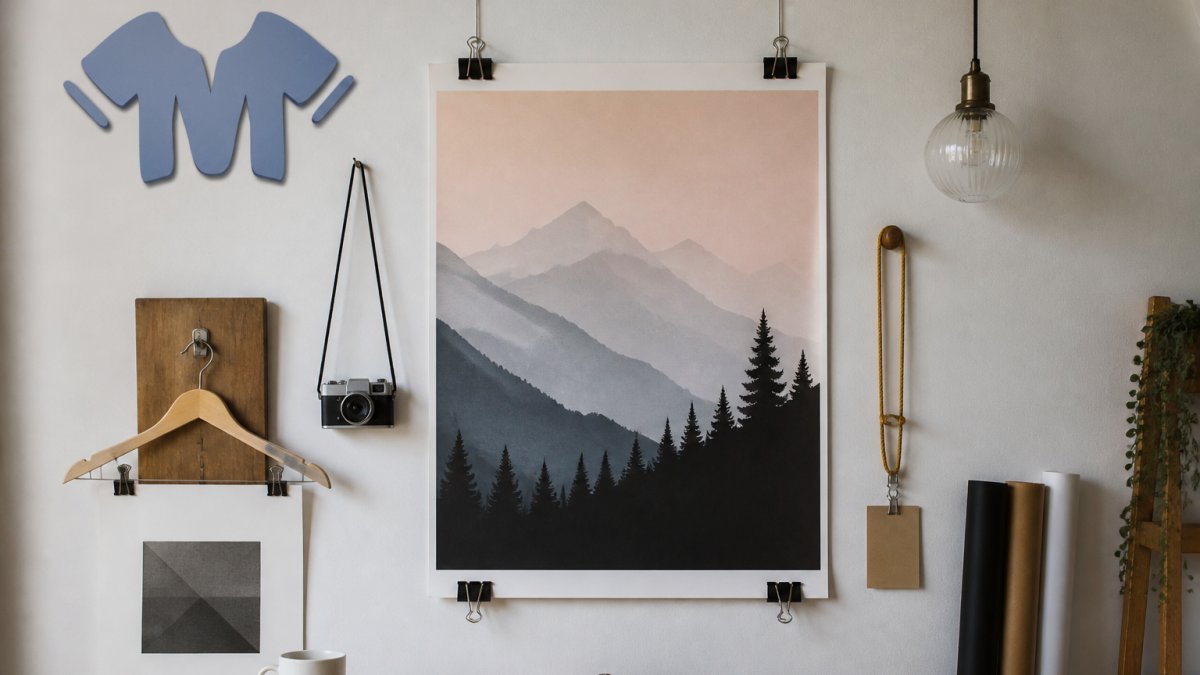
Heavy-duty metal bulldog clips deliver an industrial aesthetic while being remarkably affordable. These office staples grip the top edge of your poster with strong spring tension, allowing you to hang the clip from a single nail or hook. The result is a utilitarian look that works beautifully in studios, creative spaces, and modern apartments.
Standard office bulldog clips come in various sizes and finishes, black, silver, and gold, so you can match your wall hardware or create intentional contrast. The clips are reusable across multiple posters, making this a cost-effective solution for rotating art.
Aesthetic advantage: Bulldog clips signal intentionality. They transform a poster into a statement piece rather than a passive decoration. Pair multiple clips in a row for a gallery effect, or use oversized clips as a design feature.
Limitation: Thick or high-quality art paper may show indentation marks where the clip grips. Test on a poster you don’t mind marking, or use foam shims between the clip and paper to distribute pressure.
4. Washi Tape Framing: Colorful, Removable Borders
Washi tape creates a decorative frame directly on your wall, turning a simple poster into a curated gallery piece. This low-tack, patterned paper tape adheres to most walls without damage and tears cleanly by hand. The tape comes in hundreds of patterns and colours, letting you coordinate with your decor or create bold contrasts.
The technique is straightforward: apply your poster to the wall using adhesive strips or putty, then frame it with washi tape. The tape’s low-tack adhesive is safe for most walls and removes cleanly without residue.
Washi tape works best as a framing device for lightweight posters on smooth walls. For heavier prints or textured surfaces, combine it with stronger mounting methods to ensure the tape doesn’t peel under weight.
Best for: Temporary displays, dorm rooms, and creative individuals who like changing their decor seasonally. Washi tape lets you refresh your wall aesthetic without committing to permanent changes.
5. Poster Putty and Best Adhesive for Posters
Poster putty is a reusable, pliable adhesive that sticks to the back of your poster and directly to the wall. Unlike single-use adhesive strips, putty can be removed, kneaded, and reapplied multiple times, making it ideal for frequent rearrangement.
The adhesive is non-toxic and works on most smooth surfaces, painted drywall, concrete, and tile. Application takes seconds: knead a small amount, press it onto the poster corners or edges, then press the poster against the wall.
Honest limitation: Poster putty can leave an oily residue on some matte wall paints, particularly fresh finishes. If you’re concerned about residue, test on an inconspicuous area first. The residue typically wipes clean but may affect paint sheen temporarily.
For archival-quality posters or artwork you want to preserve long-term, adhesive methods carry risk. Putty and strips can damage delicate paper if removed incorrectly. Consider magnetic rails or clips for valuable prints.
6. Clipboards and Gallery Wall Displays
Wooden or metal clipboards transform into modular gallery displays when arranged on a wall. Each clipboard holds a poster securely via the built-in clip mechanism, creating a uniform, organized look. The beauty of this approach is flexibility: you can rearrange clipboards instantly, swap posters without tools, and create asymmetrical or grid-based layouts.
Clipboards work best for smaller to medium posters that fit within the board dimensions.
How to Flatten a Rolled Poster Before Hanging
Rolled posters arrive creased and curled. Flattening them properly prevents permanent creasing and ensures a professional appearance on your wall.
Never use high heat or a clothes steamer on posters. Excessive moisture and heat can warp paper, blur inks, and damage artwork. The 24-48 hour weighting method works for most posters without additional intervention.
7. String, Clothespins, and Bohemian Displays
String or wire lines hung horizontally across your wall create a clothesline-style display. Small wooden or plastic clothespins clip your posters to the string, allowing you to arrange multiple prints in a row or create a flowing gallery effect.
| Hanging Method | Best For | Installation | Damage-Free | Cost |
|---|---|---|---|---|
| Magnetic rails | Gallery displays, frequent swaps | One nail | Yes | Moderate |
| Adhesive strips | Renters, smooth walls | No tools | Yes | Budget-friendly |
| Bulldog clips | Industrial aesthetic, any poster size | One nail per clip | Yes | Very budget-friendly |
| Washi tape | Framing, temporary displays | No tools | Yes | Budget-friendly |
| Poster putty | Lightweight prints, frequent changes | No tools | Yes | Budget-friendly |
| Clipboards | Modular gallery walls, small prints | Hooks or nails | Yes | Moderate |
| String and clothespins | Bohemian displays, rotating art | Two hooks | Yes | Budget-friendly |
Choosing the Right Method for Your Poster and Wall Type
The best hanging method depends on three factors: poster size and weight, wall surface, and how often you plan to change your display.

Frequently Asked Questions
What is the best adhesive for posters that won’t damage walls?
Command damage-free adhesive strips and poster putty are the safest options for rental-friendly mounting. Adhesive strips leave no residue when removed, while poster putty works on most smooth surfaces and can be reused. Avoid permanent adhesives on delicate paper. For best results, wait 7 days after painting before applying adhesive to ensure the wall surface has fully cured and adhesion will hold properly.
How do I hang a large poster without frames or nails?
Magnetic poster hanger rails are ideal for large formats, clamping the top and bottom edges securely while keeping the poster perfectly flat. For adhesive mounting, use multiple damage-free strips rated for the poster’s weight. String and clothesline displays work well for gallery arrangements. Always check weight capacity before selecting your method.
Can I hang posters in a rental without damaging the walls?
Yes. Damage-free wall hanging methods include adhesive strips, poster putty, magnetic rails (which only require one wall nail), and string systems. Washi tape creates a decorative border while remaining removable. Clipboards and clothesline displays mount to walls with minimal impact. These methods are rental-friendly and leave no permanent marks when removed properly.
How do I flatten a rolled poster before hanging?
Unroll the poster and place it flat under a heavy object (books, weights) for 24-48 hours. For stubborn curls, gently roll it in the opposite direction and let it rest. Avoid heat sources, which can damage the paper. Proper flattening ensures your poster hangs evenly and looks professional.
What hanging method works best for delicate or archival-quality posters?
Magnetic rail systems and low-tack washi tape are safest for delicate paper because they don’t use adhesive directly on the poster. Clipboards protect the top edge while keeping the poster visible. Avoid poster putty and strong adhesive strips on valuable prints, as they can leave residue or damage the surface. For archival posters, prioritize damage-free methods that don’t contact the paper at all.